Earlier this month, the Central government said in a reply in Parliament it had taken measures to double farmers' income by the end of FY23 and the progress made so far indicated it was "on the right track". However, a close look at the data and at the assumptions made shows that as of now, it appears the country is unlikely to achieve the goal in real terms.

MCX-SX on Friday said the rights issue would now close on April 17.
'His contributions in setting up transparent precedents of governance are still basically intact despite the cynicism of several of his successors,' notes Jamini Bhagwati.
But the measures, particularly in agriculture, may not be enough to revive the sector and double the farm income, says S Mahendra Dev.
The scheme, which would give Rs 6,000 to small farmers in a year or Rs 500 a month, will add more money to the account of these cultivators than the money he/she saves every month on an average.

The scaling up of the India-US strategic partnership to the level of non-NATO ally with defence deals, sharing and transfer of defence technology, interoperability, joint collaboration and joint production of defence equipment has exacerbated Moscow's anxiety, notes Rup Narayan Das.

'The tally of Muslim MLAs has increased. They know they can make themselves count in the electoral system.'
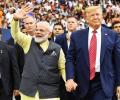
After being sworn in as the 47th president of the United States, Trump started his inaugural address with a sentence that echoed Modi's coinage some years ago, notes Modi biographer Nilanjan Mukhopadhyay.
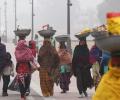
'One of the biggest employment generators, the MSMEs, have not got much from the government.'
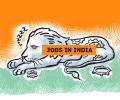
Most economists were of the view that the NSSO should release the data, as any move to withhold it will dent the image of country's statistical system.

Did you know that ethical hackers earn anything between Rs 800 to Rs 1,000 per hour?
The new numbers clearly had very different implications.

'There is a huge tax differential of 15% to 20% depending on income classification.'

Concerned by GDP slowdown and unrealistic tax targets, the economists urged Finance Minister Nirmala Sitharaman to implement long-term structural steps like land and labour reforms. Warning against any off-Budget financing the economists said the government should prepare a statement of intent for its social, rural and welfare sector expenditure.

As India looks to mend its Covid-battered economy, one thing that will grab the attention of all concerned is the path that both wholesale and retail inflation will follow. Even the Reserve Bank of India in its latest policy statement said, "Going forward, the inflation trajectory is likely to be shaped by uncertainties impinging on the upside and the downside.

Asserting that inclusive growth will remain as central plank of the United Progressive Alliance, Congress President Sonia Gandhi said it was in tune with this concept that the government had launched a series of welfare programmes and legislative initiatives, especially for the weaker sections.
Some experts says that the high net-worth requirement of Rs 50 crore for setting up an IU is a deterrent.
There is a need for better computation of numbers so as to avoid overlaps and capture the net gains to the economy.

The prices of oilseed, coarse cereals & vegetables could also be affected.

'When you do some job for a few hours, you are hardly earning enough to survive.'

Although demonetisation and improper implementation of GST along with falling prices are being blamed for much of the distress in rural India for some time, experts believe those may not be the only reason.
Much of the rural recovery story is based on the premise of agriculture doing well. Even if it clocks a growth of 2.5-3 per cent this year, it is still just around 15 per cent of the overall GDP. The non-farm sector, which constitutes a bigger portion of the overall rural economy, is now hampered by disruptions and lockdowns.

The scholarship will be presented every four years by Bachchan to an Indian citizen to develop a thesis related to media, digital technology and communication.

Before considering reducing the freedom of private investors in the derivatives market, we need to check if the maladies in markets elsewhere exist in India, says Susan Thomas.
Among the key demands of agitating farmers has been a legal guarantee on minimum support price (MSP). The protest reached a crescendo when thousands of farmers from Punjab and elsewhere marched towards Delhi late last year and decided to block the main entry points once they were denied entry. The Centre, on its part, held 11 rounds of discussions with the protesters and even offered to amend some of the provisions without much success. With now one of their chief demands met, farmers have now moved on to force the government to concede on MSP.

'But he was very quick and did a very stylish adab.' 'Of course, I didn't expect him to hug.'
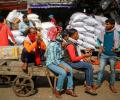
'Unemployment barely figures in the Budget except as a derived demand from the industry and infrastructure.' 'There is no effort at direct attack on unemployment.'
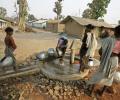
In May, Satpal Singh, who runs a dairy business with three buffaloes in Jewar, near Noida, was worried about the steep spike in input costs. Singh said dry fodder rates, which cost Rs 1,500-2000 per tractor trolley last year, were quoting at Rs 4,500-5,000. The price of other cattle feed ingredients (that include mustard meal and similar mixes) had also gone up from Rs 2,000 per quintal to Rs 3,100-3,200 per quintal.

We suffered worse political degradation during the Emergency. But we emerged resurgent and vigorous because the spirit was not broken. This time around, we face an imminent threat to it, says Shreekant Sambrani

During the day-long debate, the lines between science and religion often got blurred with many invoking religious texts and the contribution of 'rishi munis' to highlight India's tryst with the extra-terrestrial world.

Together, they controlled nearly Rs 26 lakh crore of assets at the end of FY16.

The fund allocated for pulses buffer is more than 40% of entire farm ministry's 2016-17 budget.

Indian farming was transformed after the mid-60s.

The Planning Commission has not been central to the policy making process since the mid-1960s, says Nitin Desai.
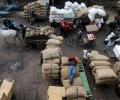
'How low GDP would have been, we don't know.' 'It raises serious questions because so many indicators are pointing to such a sharp decline and GDP estimates are still showing 4 per cent growth.'

Though the Union HRD ministry has vehemently denied that Shevgaonkar resigned under government pressure, some allege that this is yet another example of the government exercising its influence over educational institutions
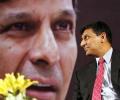
While stating that a strong government should be led by those who have expertise, motivation and integrity and can provide the needed public good, Rajan warned that "strong governments, may not, however, move in the right direction".

Santishree Dhulipudi Pandit won't be afraid to tangle with the toughest of them.
'Unless we get the health and economic situations right at the same time, we will not recover.'
Kiran Vissa, co-convenor of National Alliance for Sustainable Agriculture, said that amendments to the EC Act have nothing to do with farmers' welfare but instead meant to please big players and agriculture companies. This is because small and marginal farmers don't have the storage capacity to attract provisions of the EC Act.
